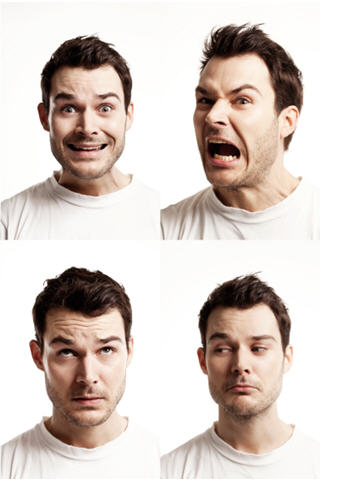
 Before we get into the six dimensions of emotional style, a little background is called for. Most of us are familiar with the pop-psych approach to measuring personality, the Myers-Briggs Type Indicator (MBTI), right? What may not be as well-known is the fact that this popular tool is based on Carl Jung‘s musings about the brain. Jung did the best he could to make guesses about the nature of personality in a pre-neuroscience world, but he was hampered by his time, mystic notions related to psychic energy, and limited research tools.
Skip forward about half a century, and you’ll find that, even though much more is known today about the brain, public practice hasn’t yet caught up. You will still find many schools and workplaces relying on a 50-year-old tool to make judgments about human potential; a tool which rests on the conventional assumption that we’re born with a specific personality and carry it with us until we die.
Looking at how little has changed in actual practice over 50 years, you would think the intervening revolution in genetics has happened silently, underground—without so much as fluttering the composure of the average human resources director or high-school counselor.
You know the revolution, I’m talking about, right? The one that overturned the idea that genetic equals unchangeable. I think most people have heard the phrase “nature plus nurture” by now, but its ramifications may not be so easy to grasp. The research is not controversial at all, and as neuroscientist Richard Davidson and Sharon Begley put it in The Emotional Life of Your Brain, it toppled the nature-versus-nurture debate “as thoroughly and dramatically as the statue of Saddam Hussein in Baghdad. Scientists made two startling, and related discoveries,” they write: “that a genetic trait will be expressed or not depending on the environment in which a child grows up, and that the actual gene—the double helix that winds through every single one of our cells—can be turned on or off depending on the experiences we have.”
To underscore what that means, they continue, “Contrary to the popular belief that if something is genetically based we’re stuck with it for life . . . even genetically based traits can be dramatically modified by how parents, teachers, and caregivers treat children and by the experiences children have.”
Yes, even traits we think of as innate parts of our personality. And even more interesting, some of the traits we’ve thought of as basic personality traits are not as basic as we once thought. Many of them are the result of a combination of more than one brain circuit related to emotion.
This is pretty big news, actually. What it means is that there is something more fundamental to who we are than what we’ve thought of as “personality.”
After studying the specific neural signatures that underlie what we’ve always thought of as “personality traits,” researchers have identified six dimensions, which Davidson refers to as Emotional Style. “Each dimension describes a continuum,” he and Begley explain. “Some people fall at one or the other extreme of that continuum, while others fall somewhere in the middle. The combination of where you fall on each dimension adds up to your overall Emotional Style fingerprint.”
The six dimensions are:
1. Resilience style: “If you have an argument with your significant other,” asks Davidson, “does it cast a pall on the remainder of your day, or are you able to recover quickly and put it behind you?” We fall between “Fast to Recover” or “Slow to Recover” on this dimension.
2. Outlook style: “Do you maintain a high level of energy and engagement even when things don’t go your way? Or do you tend toward cynicism and pessimism, struggling to see anything positive?” We fall between “Positive” and “Negative” on the Outlook dimension.
3. Social Intuition style: “Can you read people’s body language and tone of voice like a book? . . . Or are you puzzled by—even blind to—the outward indications of people’s mental and emotional states?” We are described as anywhere between “Socially Intuitive” and “Puzzled” on this dimension.
4. Self-Awareness style: “Are you aware of your own thoughts and feelings? . . . Or do you act and react without knowing why you do what you do?” We fall between “Self-Aware” and “Self-Opaque” on this dimension.
5. Sensitivity to Context style: “Are you able to pick up the conventional rules of social interaction? . . .Or are you baffled when people tell you that your behavior is inappropriate?” On this dimension we’ll find ourselves somewhere between “Tuned In” and “Tuned Out.”
6. Attention style: “Can you screen out emotional or other distractions and stay focused? . . . Or do your thoughts flit from the task at hand to the fight you had with your spouse this morning or the anxiety you feel about an upcoming presentation for work?” We fall on this dimension between “Focused” and “Unfocused.”
Your “personality” is a cookie dough made up of differing dollops of these ingredients; with the old familiar personality traits being traced to combinations of these neural signatures . . . and we can adjust where we fall on these dimensions if we want to.
But we don’t have to. There is no ideal emotional style, says Davidson, but he also doesn’t see himself in the “I’m okay, you’re okay” camp. This, he says, is because, “some emotional styles simply make it harder to be a productive member of society, to forge meaningful relationships, and to achieve a sense of well-being.” That’s actually the test, he says. But whatever reason you may have for wanting to tweak your position on any of these dimensions, the point is that if you do want to alter your emotional style, you can. “Sorry, this is the way I was born,” is no longer a limitation.
This understanding might shed some light on why it can be so damaging to pin a “personality type” on a kid in grade school and set their life’s course accordingly. Or to skip hiring an employee based on a test that assesses his or her personality “potential” using the old “here’s who I am” paradigm.
But it may also come as a welcome realization: a gift, even. To think that we aren’t stuck with the aspects of our approach that aren’t working for us can be seen, in some respects, as an open door to a new way of life and a more effective way of relating to others.
Because at the root of it, the key to an effective emotional style is the key to the success of our relationships. And relationships are what make our lives worth living.
In future posts, we’ll go over some of the more familiar personality traits in more detail, tracing them to their underlying emotional styles. But you can catch a sneak peek at some of them in Emotions are Us, today’s featured article on Mom Psych.

 Mom Psych