Archive

Uncategorized

It’s a common complaint from parents: “Our kids spend too much time on their screens and they don’t listen to us when we try to set boundaries.” Some parents feel so helpless about this—and other parenting issues—that they resort to parenting techniques that seem creative but only serve to undermine the authority they’re attempting to impose.

A particularly inelegant example of this sort of desperate parenting was displayed on YouTube a few years ago* as a mother bellowed her bullying manifesto while gleefully brandishing a shotgun in her backyard. Her children looked on, studiously unimpressed, as she blew their cell phones off a tree stump, one by one. Dad’s more passive role was to record the video for posterity and collect the shards, which he then returned to the stump so Mother could finish obliterating them with a sledgehammer.

Of course, this could simply have been an ill-conceived stunt aimed at creating an income stream from a viral video, but public shaming is unfortunately not a rare tactic in some parenting styles. True, it’s not always carried out online, but it is no less harmful to family relationships when we expose our children’s sins for all to see, regardless of audience size or place.

Most parents who use shaming as a technique really do love their children; they believe they’re exercising a form of “tough love” that will work in the long run by cultivating a sense of guilt for inappropriate behaviors. Their own parents may have used similar techniques with them, and their survival seems proof enough (to them) that the techniques work. However, there is a world of difference between surviving and thriving, just as there is a world of difference between the effects of guilt and the effects of shame.

What are those differences?

Guilt and shame are emotions we feel when we’ve done something wrong and both may prompt feelings of remorse and regret—but there’s a huge difference between them. Shame involves an aspect of exposure and promotes feelings along the lines of “I am a bad person,” while guilt encourages feelings of “I did a bad thing.”

Why would you want one result and not the other? “I am a bad person” leaves little room for the potential to change, while “I did a bad thing” opens one up to the ability to feel contrite along with the hope that personal change is possible. But an even more important aspect of guilt versus shame is that guilt allows for the belief that repair is possible—repair of the relationship, but also restoration of the guilty party’s reputation in the eyes of others as well as the self. Shame, on the other hand, can drive someone inward toward a sense of helplessness or even lead to defensive responses: a tendency to blame others or lash out.

Despite the fact that parents may believe their love for the child isn’t in question, when a child is shamed in public, there are now other onlookers involved. The child can’t know whether his or her reputation and relationship with these others can be repaired. Even the parent-child relationship may be damaged more than the parent realizes. Anger is a common reaction to the permanent loss of anything that’s cherished: and what do we want our children to cherish more than a reputation for appropriate behavior? If we provoke this kind of anger frequently, we’re likely to build a level of resentment in our children that undermines our influence permanently.

Ironically, some parents mistakenly believe public shaming is an effective way to teach children the importance of a good reputation.  But rather than privately addressing the problem (as the self-controlled, mature party) and working with the child to protect his or her reputation during the learning process, they actually cut their child’s reputation to ribbons—sometimes permanently, particularly if they chronicle the child’s failures online.

Of course, some children do have higher levels of resilience than others, and any child may survive a few shaming episodes. But this brings us to the difference between surviving and thriving.  Returning to the YouTube mother for a moment, she’s depicted as desperately trying to teach her children restraint when it comes to screen time and discernment about what behaviors are appropriate online. One or more of her children may eventually get over the anger their body language plainly displays in the online video, and they may learn these lessons. They may be able to ignore her example, which directly contradicts what she’s trying to teach. They may grow up and lead relatively normal lives. In other words, they will likely survive.

On the other hand, imagine that instead of destroying expensive electronics (whether essentially hers or not), she had taught her children how to treat valuable property—beginning by setting a good example herself? What if she encouraged restraint and respect by first modeling it and then reinforcing any first steps they made toward displaying it, no matter how small?

One of the most common mistakes we make as parents is to forget that we can’t just eliminate inappropriate behaviors; we also have to instill appropriate replacement behaviors, and that requires positive reinforcement. Unfortunately this takes our full attention, because it’s not always easy to recognize the first steps children take toward the behaviors we’re trying to teach. Often we don’t notice a behavior until it bothers us, and by then we’ve missed a great many opportunities to reinforce the positive opposite behavior.

On the other hand, when parents take the time to recognize their children’s positive behaviors, a bridge is built. Negative behaviors become easier to change because the positive relationship motivates more cooperation. When we parent in a positive mode, as a positive role model, we’re less likely to need to “take back” our role as parents, because we’d never have let go of it to begin with.

In any case, even if we have somehow lost our effectiveness as authority figures, playing the public “shame game,” whether online or off, is not going to get it back. When children seem to be on the verge of tarnishing their reputation, the most effective approach is to apply positive, proven, timeless parenting strategies that don’t include shooting that reputation to bits on a public platform.


*Sorry (not sorry), I didn’t include a link because there’s no good reason these parents should profit from exploiting the public shaming of their children.

July is Social Wellness Month, so it seemed an appropriate topic for a guest post on Chelsea’s Blog, published by the Chelsea Foundation:

chelseafoundation's avatarThe Chelsea Foundation's Official Parenting Blog

How to connect emotionally with your children and help them learn prosocial skills during Social Wellness Month! Family psychology writer Gina Stepp discusses the importance of forging and maintaining positive social bonds in children’s lives.

By Gina Stepp, www.mom-psych.com

As parents, we all want our children to lead happy and risk-free lives, right? But what makes the difference between kids who are at risk for mental-health or behavioral problems and those who will manage to hang on to their inner compass through life’s ups and downs?

There are several important skills or “competencies” children need for strong psychological health, but one of the most important of these has to do with their ability to forge and maintain positive social bonds.

This ability requires two almost inseparable characteristics. The first is the ability to regulate distress and negative emotions, which children begin to build from birth. The second is the later-developing…

View original post 708 more words

All over America (and judging from social media—the world), today’s tragedy in Connecticut has been deeply felt. We grieve painfully with the parents, teachers and students of Sandy Hook Elementary School and the wider community of Newtown.

As inadequate as our condolences are, especially to the parents involved, they are offered with all our hearts: we are all diminished by these unspeakably tragic losses.

pets and mental healthSometimes I think we underestimate the educational wealth to be gained from our pets. Case in point: If you viewed the world the way your cat does, you’d find it a lot easier to respond to barbs and insults with a casual eyebrow-lift and a wide yawn. You might inadvertently expose your claws as you stretched before rolling over, but it wouldn’t really mean anything beyond extreme boredom.

If you viewed the world the way your dog does, you’d see only the good in people and you’d go into every relationship expecting the best. The question, “What am I, chopped liver?” would mean nothing to you, you LOVE chopped liver. It’s your favorite thing. You’d appreciate all the little things people do for you, and even if they gave you leftovers you’d wag your tail and make them feel as though they’d given you the moon.

You never see a pet Iguana blinking at adversity, and fish don’t waste effort worrying about things that may or may not happen. It’s pretty much “just keep swimming” for them, and “living in a fishbowl” isn’t a reason to have a nervous breakdown.

But apparently, having a pet isn’t just an exercise in uncovering life’s little lessons. According to researchers, animals return very real physical and mental health gifts to their human companions. Hence the focus on Animal Assisted Therapy by psychiatrists, hospitals, therapists and other health professionals.

Does your genetic imprint leave you with an elevated risk for heart attacks? Studies such as one undertaken by Australia’s Baker Medical Research Institute find that having a pet lowers blood pressure and cholesterol levels by a degree equal to that of typically recommended dietary changes.

Suffering from depression? Recovering from surgery or heart attack? Animals can help you return to normal measureably sooner.

Are you close to a child who may be experiencing some form of abuse or neglect in the home? Researchers find that a relationship with a family pet can ameliorate some of the attachment insecurities and other deficiencies such children develop. Even if you can’t introduce a pet into the home, occasional visits with an animal can be helpful, especially when an accompanying adult can explain the right treatment of the pet to the child.

Considering all the benefits to be gained from pet companionship, perhaps there are ways we can repay our four-footed (or no-footed) friends. If nothing comes to mind immediately, you might check out this post by my friend Lisa McGlaun on Life Prints. As Victor Hugo suggested, we may have more to gain from pet relationships than research has yet upturned.

“From the oyster to the eagle, from the swine to the tiger,” he wrote, “all animals are to be found in men and each of them exists in some man, sometimes several at the time. Animals are nothing but the portrayal of our virtues and vices made manifest to our eyes, the visible reflections of our souls.”

in-law-relationships
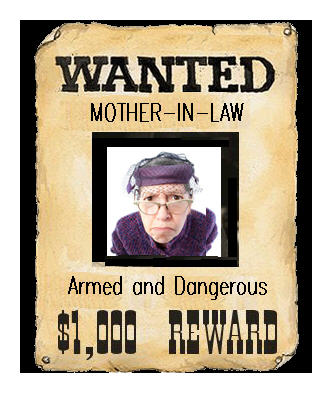
An old joke asks, “What’s the difference between in-laws and outlaws?” Of course the answer is, “Outlaws are wanted.” (Ooh.) My apologies to the London borough of Barnet, I understand that their Council outlawed mother-in-law jokes a couple of years ago, although I’m unclear as to whether jokes about other in-laws are still allowed. In my case it’s a moot point, I hasten to assert that I have been singularly lucky-in-law.

As a side note, Dictionary.com actually has a definition for “mother-out-law.” Apparently it’s the designated term for the mother of an ex-spouse. Of course, despite the West’s notoriously high divorce rate, there’s not much incentive to tell jokes about mother-out-laws—after all, out of sight, out of mind.

Certainly there’s a reason why mother-in-law jokes are so common, although to be strictly accurate it isn’t only mothers-in-law who may be perceived as “outlaws” within the family. When you think about it, most of us qualify as in-laws in one way or another. But whether we’re a parent-in-law, sibling-in-law, or even an aunt-, uncle- or cousin-in-law—we each have much to gain from reading Don’t Roll Your Eyes: Making In-Laws into Family, the latest book by Brandeis University resident scholar Ruth Nemzoff.

Why are these particular relationships so challenging? Naturally I asked this very question in a recent interview with Nemzoff.

“We become an in-law by a decision made by someone else,” she pointed out. “The younger generation makes the choice of partner, but they have no say in all the relatives who come along with their mate.” Nor do the relatives. Suddenly there are all kinds of new relationships among people who are likely to come from very different backgrounds. “They have little idea which buttons they can push, what happens when they push one, and which buttons the new person will push in them,” she explains. “They have not survived disagreements and arguments. In-laws do not share a common history. They are virtual strangers.”

Obviously, this sets the stage for a whole slew of potential pitfalls. Fortunately, Nemzoff has done her research and offers a glimpse into the real-life experiences of those who have ridden bareback over the badlands and survived to tell the tale.

The common denominator in most in-law issues? A lack of flexibility in the face of unmet expectations.

“I wish I could end this book with simple, easy-to-follow lessons to instantly improve your connections with your in-laws,” Nemzoff writes. But of course, she acknowledges, “that would be unrealistic.” Nevertheless she does offer 10 points that may not be easy but have the potential to transform all relationships—not just those defined by law:

  1. Reframe thoughts with a positive view. You have control over how you interpret events and actions.
  2. Deal with what you have, not what you want. Make what you have work for you.
  3. Put a statute of limitations on slights. We can’t change the past, only the present.
  4. Listen instead of judging. Use differences of opinion as an opportunity to learn.
  5. Take the long view. Situations change over time and with alterations in life stages.
  6. Be forgiving. Don’t sweat the “small” stuff and don’t impose your sacred cows on others.
  7. Be creative. Look for things that connect you to your in-laws rather than divide you.
  8. Call upon your more mature self. To make peace we must be peaceful.
  9. Remember that we are all new to this game. And don’t underestimate the capacity for change.
  10. Be curious. It’s the first step to compassion, understanding and forgiveness.

As I hinted earlier, I have some pretty spectacular in-laws, and it doesn’t stop with the siblings. In fact, one treasured in-law is a cousin whose nearest common ancestor with my husband lived in the 1600s. We are Facebook friends and I’ve come to count on a daily dose of his sense of humor, even though he lives more than 3,000 miles away. Another of my many treasured in-laws is well known to readers of Aunt Psych. My brother is the one who brought her into the family, but she is definitely a keeper.

Could we find things to clash over if we tried? Certainly, who couldn’t? But as Nemzoff underscores repeatedly, getting along with in-laws—or anyone—is a choice. “Families that get along do so in part because they decide to get along,” she says. “By envisioning and emphasizing the positive, we train ourselves and others to accept the best we have to offer.”

Christine Lavin’s folk albums have been enjoyed in our house since before my oldest child was born. Of course, if you aren’t familiar with the singer, you may well wonder why her name opens an article purporting to discuss the latest news about Pluto. (You know – that heavenly body formerly known as a planet.) It’s not a complicated story really, but a little background information might help.

It all started back in 1996 when Lavin wrote a song entitled Planet X, her musings sparked by a USA Today article about the controversy surrounding Pluto’s planetary status. After a brief rhyming history of Pluto’s discovery and the scientific arguments over its importance, she asked the question,

But how are we going to deal with it
if science comes up with the proof
that Pluto was never a planet.
How do we handle this truth?
As the PhD’s all disagree
we don’t know yet who’s wrong or who’s right
but wherever you are, whatever you are,
Pluto, we know you’re out there tonight.

We found the song (and the question) amusing, but we never really expected events to come to a head as they did this week when Pluto’s status was decided once and for all at a meeting in Prague of the International Astronomical Union. This, apparently, is the body that sets standards for the field of astronomy, which means they have always had the power to demote Pluto to a lowly Kuiper Belt object (KBO), Trans-Neptunal object (TNO), or even a “Plutino.” Plutinos, by the way, are objects that orbit the sun beyond Neptune. Most are much smaller than Pluto and are believed to be similar to comets, but they are defined by orbital patterns which resemble Pluto’s. This of course makes it all a bit confusing. How does one imagine classifying Pluto among its own namesakes? And incidentally, are they going to have to rename plutonium now?

More to the point, why does the International Astronomical Union even care? Why all the fuss over a tiny frozen planet whose only real value to the universe was (thanks to a little help from Walt Disney) its ability to capture the imaginations of school-children on a planet more sure of its status a couple of billion miles away?

The truth is that Pluto was beginning to make the solar system seem a bit more complicated than the average astronomer likes. As more and more “bodies” are making themselves known at the edges of our solar system, Pluto has begun looking less and less like another planet, and more and more like the rest of the non-descript and far-flung debris littering space. This has resulted in increasing scientific disdain for the ninth planet, despite the fact that new discoveries reveal Pluto has at least three of its own moons—a distinction that would give any of the rest of us a great deal of personal significance. Nevertheless, astronomers began to think that if they allowed Pluto to join the planetary club, the door might have to be opened to dozens or even hundreds more. At the very least, they would certainly have to admit a tenth body discovered last year which is even further from the sun than Pluto but seems to be slightly larger and has been popularly nicknamed “Xena.” As long ago as 1996, Christine Lavin could see where all this was going:

and now 20 astronomy textbooks
refer to Pluto as less than a planet
I guess if Pluto showed up at a planet convention
the bouncer at the door might have to ban it.

On the other hand, the International Astronomical Union may have done Pluto a good turn. If the IAU had given Pluto the thumbs up and with it hundreds of other “planets,” one might imagine the beleaguered entity responding in Groucho Marx style, with the words:

“Please accept my resignation from the solar system. I don’t care to belong to any club that will have me as a member.”